 Analyst Bootcamp
Yield reporting vendor gap analysis
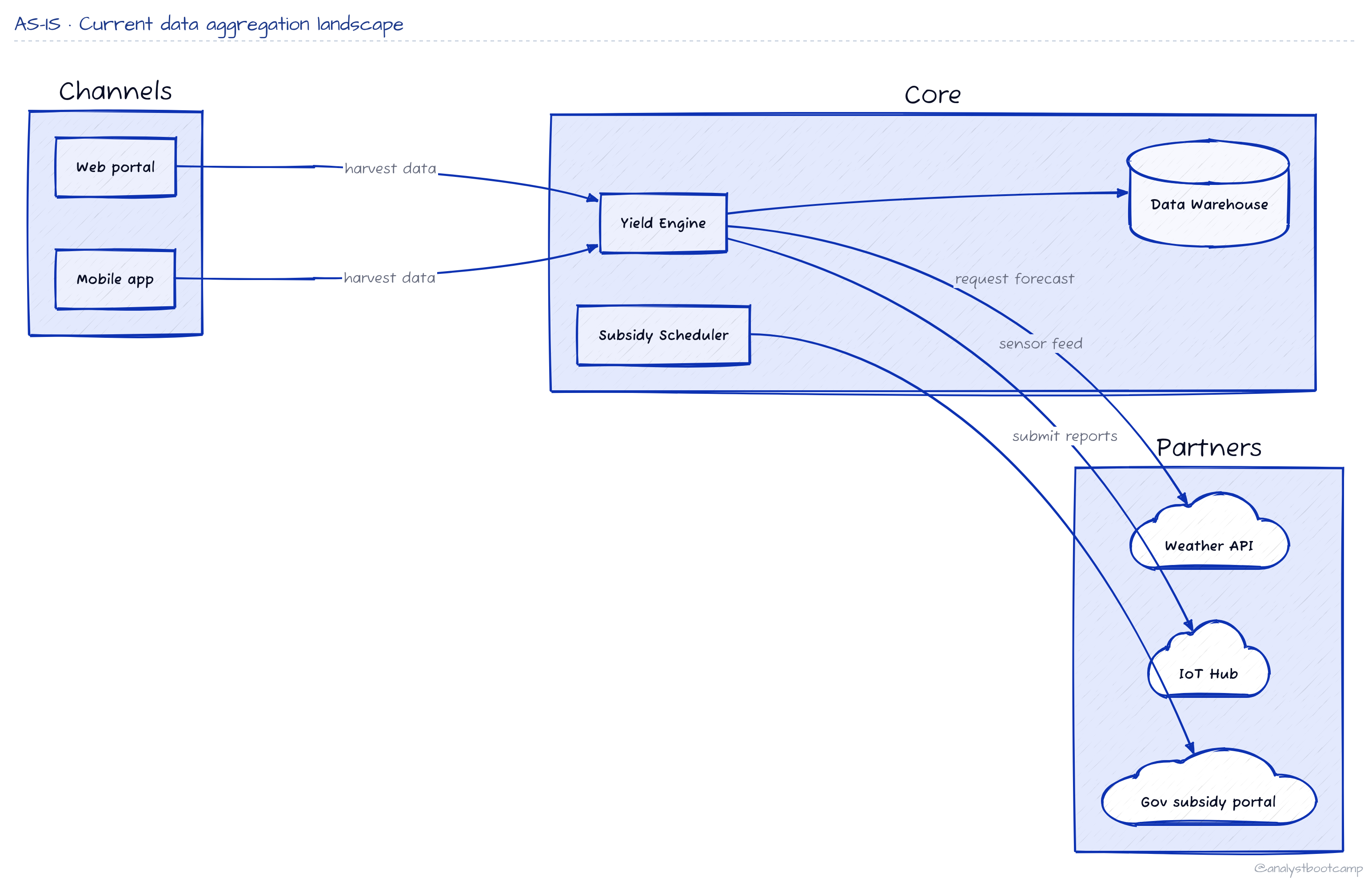
The situation
You are a business analyst on HarvestLink's CropOps team, a SaaS platform serving 3,200 smallholder farms. The stack collects data from a web portal, mobile app, weather API and IoT hub, then creates monthly yield reports due to government within 10 days of harvest. The COO wants a gap analysis of AgroSuite for yield reporting.
Your task
- Create a gap table that maps each yield-reporting requirement to AgroSuite's capabilities, labeling Covered, Configurable.
- Identify which gaps could be resolved by changing internal processes instead of system changes.
- Recommend go/no-go for AgroSuite versus the current stack, weighing effort against regulatory risk and subsidy penalties.
What this gap analysis against a vendor system exercise trains for business analysts
Compare what the business needs with what an off-the-shelf system provides; decide what is configuration, customization, or a process change. The setting is agritech: fields, seasons, machinery, harvest logistics, weather data, subsidies, cooperatives.
Typical deliverables for this kind of task:
- gap table (need / covered? / how to close)
- recommendation
- questions to the vendor
Middle level: two or three interacting rules or systems, 2 deliverables, one real trade-off; a focused slice of a bigger problem. Budget 30–70 minutes.