 Analyst Bootcamp
JITA rollout KPI suite
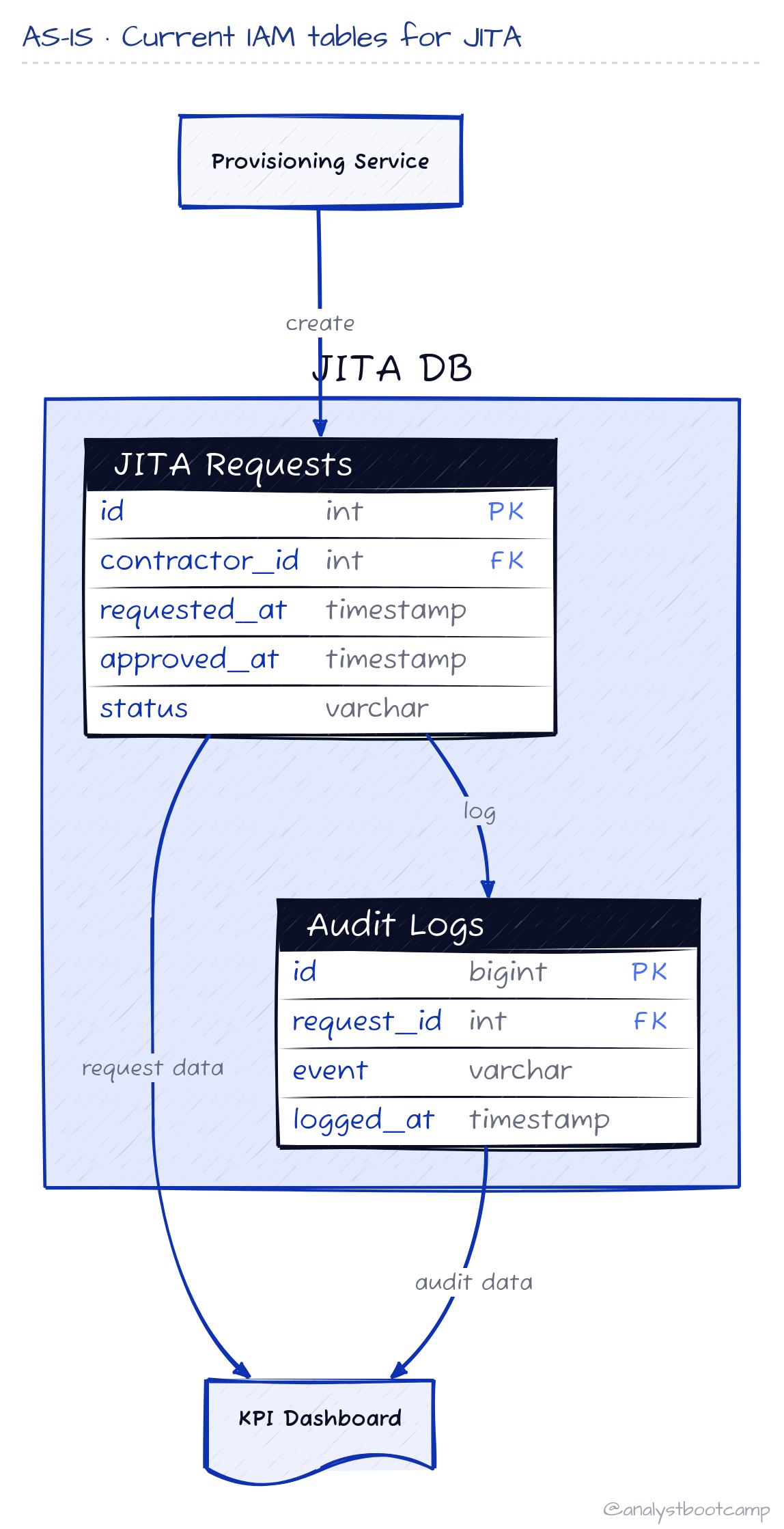
The situation
You are senior BA on NimbusOps' SecureGate JITA rollout. The team must prove Just-In-Time Access cuts provisioning to under 5 minutes, raises adoption and improves security. NimbusOps serves 320 enterprises, logs 1,200 privileged incidents per year (≈100 monthly), follows ISO 27001 and retains audit data for 180 days.
Your task
- Define 4-5 KPI metrics for adoption, avg provisioning time, incident reduction, audit completeness, with formulas.
- For each metric list source tables/fields, required aggregations, and known distortion factors.
- Select the single most critical KPI to monitor security benefit and justify why it outweighs the others.
What this define metrics for a feature exercise trains for business analysts
Define how success of a feature will be measured: metrics, their exact definitions, data sources and what could distort them. The setting is identity & access (iam) platform: users, roles, SSO, MFA, sessions, invitations, offboarding, audit.
Typical deliverables for this kind of task:
- 3-5 metrics with precise definitions
- data needed for each
- possible distortions
Senior level: ambiguity or conflicting constraints, cross-system impact, needs a decision with justification; still one focused slice, not the whole project. Budget 45–90 minutes.